This September for National Inclusion Week, Liverpool based creative practitioner, Jade Brown, is bringing a new language to Liverpool’s creative heart, Baltic Creative, with an exhibition that marks the culmination of her Master’s in Creative Practice and, more importantly, celebrating a year of co-creation, experimentation and connection.
About Jade
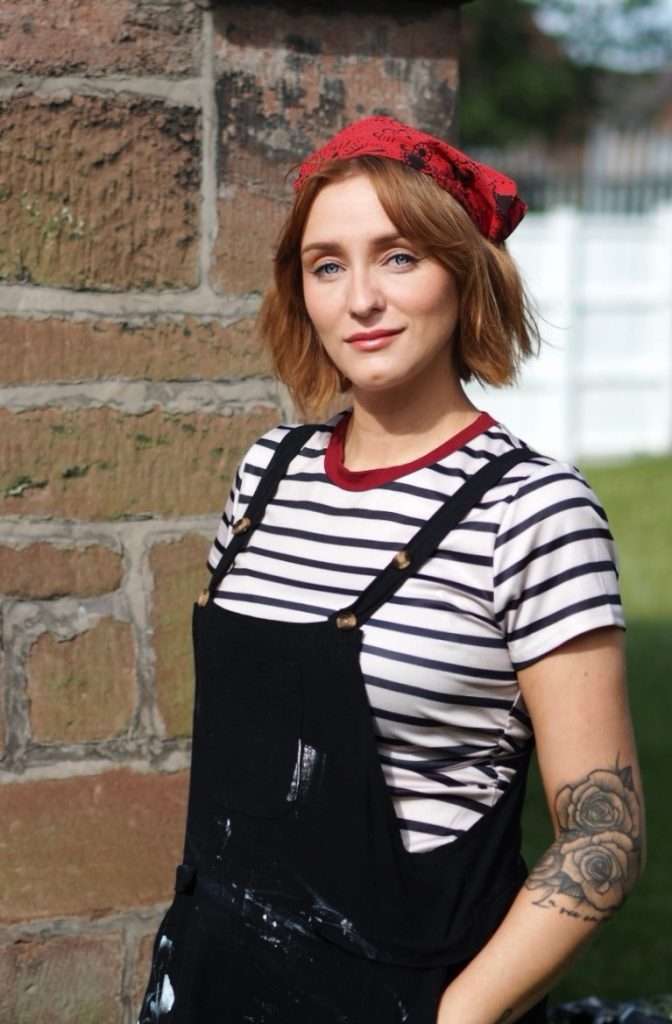
Jade Brown is a Liverpool-based creative practitioner, artist and designer whose work sits at the intersection of creativity, inclusion and social impact. Alongside co-leading EPIC Social Care CIC, she works collaboratively with communities, businesses and public organisations to explore how creative practice can help make spaces and experiences more inclusive. ARTiculate and NeuroSafe Spaces are two projects which have developed through her Master’s in Creative Practice, bringing together her interests in colour, co-design and creating meaningful change through design.
The Story Behind NeuroSafe Spaces: Connection Through Colour
Baltic Creative are delighted to host ‘Neuro Safe Spaces: Connection Through Colour’ in The Shed this National Inclusion Week.
We asked Jade to tell us a bit more about how it came about. She told us:
“The project began through my work with the young adults at EPIC Social Care, where I wanted to explore whether creativity could offer different ways to recognise, express and regulate emotion. Rather than beginning with a set of resources or assumptions about what might work, I facilitated a process that allowed the ideas to develop through the people they were ultimately being designed for.”
“Together, we experimented.”
“We explored colour and how differently we connect emotions to it. We introduced movement, breathing, sound, touch and different sensory experiences. We experimented with scarves, visual prompts, creative exercises and moments of stillness. Some ideas connected immediately, others evolved, and the young people’s responses continually shaped what we tried next.””That process has been fundamental to my Lottery funded ARTiculate programme. Every element exists because of the people who took part in creating, experiencing and refining it. Through lived experience, observation, conversation and co-creation, those explorations gradually became practical tools and resources.”
“As we used them, I began to see the impact they could have – supporting young people to better communicate how they were feeling, encourage participation, tackling isolation and building connection both with others and within themselves.”
“My role has been to facilitate that process, listen, observe and translate what we have learned together into something that could potentially reach beyond the walls of the social care space.”
“The artwork created through ARTiculate is therefore not really the end result of the project. It is a visible celebration of the process and the connections that were made through colour.”
“The pieces give physical form to the emotional mapping work we explored together. They don’t attempt to prescribe what a particular colour should mean or how somebody should feel. In fact, our work demonstrated quite the opposite – that sensory and emotional experiences are deeply individual. The exhibition celebrates those differences while making the otherwise invisible process of exploring and communicating emotion visible.”
“What’s blue for you may be different for me.”
From ARTiculate to NeuroSafe Spaces
As the project developed, it made Jade think increasingly about the environments beyond EPIC. If relatively simple tools and greater understanding could make a difference within their own setting, what could happen if that thinking became part of the everyday spaces we all use?
That question became the starting point for NeuroSafe Spaces.
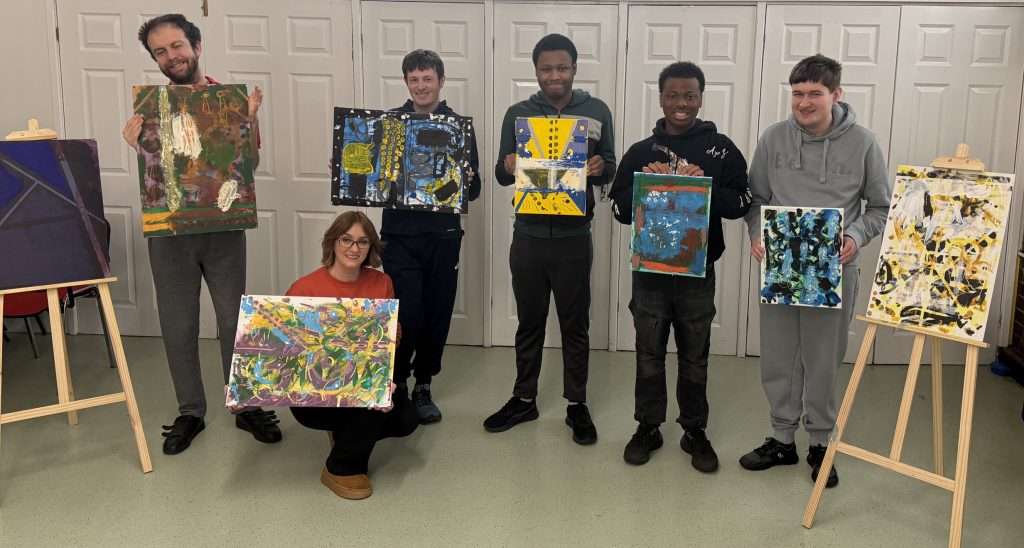
Jade explained “My ambition is for inclusion not to be an afterthought, something organisations feel is complicated to achieve or just a box checking exercise. I want to explore how it can be easy to introduce and, ultimately, embedded into the ethos of a space through shared understanding and empathy.”
“NeuroSafe Spaces takes the learning and resources developed through ARTiculate and begins to translate them into practical tools that businesses, cultural venues and public spaces can use. Importantly, it continues the same principle on which the original project was built: the people who experience these environments need to be part of shaping them.“
“It isn’t about creating one definition of a “neurodivergent-friendly” environment. Our work has shown me why that wouldn’t work. People experience space differently. Instead, it is about understanding those differences, reducing unnecessary barriers and giving people greater choice, agency and access to tools that may help. That thinking is now beginning to influence my wider creative practice.”
Taking the learning into real-world spaces
The next stage is about taking learning developed through co-creation and testing it within real-world environments. Liverpool John Lennon Airport and Crown Paints have been integral to the first stage of NeuroSafe Spaces.
As a member of Liverpool John Lennon Airport’s Accessibility Forum, Jade has the opportunity to listen to a much wider range of lived experiences and understand some of the barriers people can encounter when travelling. The airport is also leading by example by becoming one of the first major environments to explore how NeuroSafe Spaces can work at scale. They have introduced more than 20 NeuroSafe Spaces touchpoints throughout the airport, making the resources developed through ARTiculate available to passengers at different points in their journey. At the moment, the QR codes are scanned (on average) by 72 unique users each day.
Importantly, the airport’s involvement goes beyond displaying resources. They are working with Jade to explore how co-design and inclusive creative practice can influence the passenger journey and physical environment, helping to demonstrate what can happen when accessibility is considered as part of the experience from the outset rather than added afterwards.
Back to the Exhibition
This exhibition brings the year’s work together in a very different way – as something to walk into, experience and enjoy, rather than simply read about.

Visitors can expect a colourful and immersive space filled with the visual outcomes of emotional mapping, from collections of small individual canvases to large-scale collaborative pieces, flowing fabric, projection and light. Together, they transform The Shed into a tactile expression of the many different emotions, responses and connections that have emerged throughout the project.
There is no right way to experience it. Jade says “I hope people take their time, find the pieces or colours they naturally connect with and perhaps notice something about their own response to the space along the way.”
“More than anything, I want the space to feel joyful, welcoming and human. After a year spent exploring some big ideas, this is my opportunity to invite other people into the NeuroSafe Spaces experience.”
The exhibition runs at The Shed at Baltic Creative from 11–25 September, open to the public while 92 degrees cafe is open.
Come in, explore, find your colour and see where it takes you.